

Welcome to the Jewish Heritage of Ksar el-Kebir website.
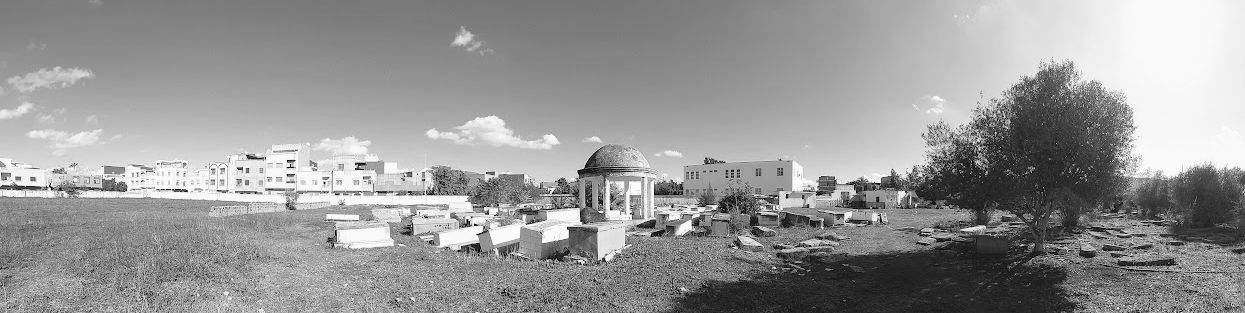
This website brings together information about the Jewish heritage of Ksar el-Kebir, including the Jewish cemetery, synagogues, the Tzadik Rabbi Yehuda Jabali, and historical sources related to the community. Visitors can search for names appearing on gravestones and in historical communal registers, explore the history of the community, and follow ongoing documentation and preservation efforts in the city.
The objectives of this website are to:
- Provide up-to-date information about the Jewish heritage sites of Ksar el-Kebir, including the precise locations of graves within the Jewish cemetery.
- Support genealogical research by providing access to information from historical documents and cemetery records.
- Strengthen the connection of former community members and their descendants to their heritage, while preserving the legacy of the Jewish community of Ksar el-Kebir as an integral part of the Sephardic Jewish heritage of northern Morocco.
- Raise public awareness and encourage support and resources for the preservation and restoration of the city's Jewish heritage sites.
Historical Background
Ksar el-Kebir, also known simply as Ksar, is a city in northern Morocco situated on the banks of the Loukkos River. Its strategic location between the coastal cities of northern Morocco and the country's interior, together with the fertile lands surrounding it, made it an important agricultural, commercial, and military center for centuries.
The city's Jewish community took shape primarily after the Expulsion from Spain in 1492, when many Sephardic Jews settled in northern Morocco, bringing with them their language, traditions, and cultural heritage. Over the centuries, the Jewish community of Ksar el-Kebir developed a distinct Sephardic identity while maintaining close ties with other Sephardic communities in the region. The language spoken by its members, enriched by the influence of Moroccan Arabic through everyday interaction and trade, gradually evolved into the Judeo-Spanish dialect now known as Haketia.
During the second half of the nineteenth century and throughout the period of the Spanish Protectorate, the community underwent profound changes. The expansion of modern education, the growing Spanish presence, and the reorganization of communal institutions significantly transformed the social, economic, and legal life of the city's Jews and accelerated the process of modernization.
Following the Second World War, the community began to decline rapidly as successive waves of emigration left Morocco. By the late 1980s, no Jews remained in Ksar el-Kebir, and the community had effectively ceased to exist.
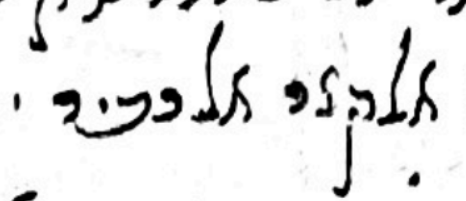
As the community dispersed, its archives and historical records were scattered as well. Some remained in the hands of families originating from Ksar el-Kebir, while others were transferred to the Archive of the Jewish Community of Tangier.